

Capacity Building Training for Iyalojas Toward the Domestication of the Women’s Economic Empowerment (WEE) Policy in Lagos State
1.0 Executive Summary
The Policy Innovation Centre (PIC), in collaboration with Tech Herfrica, facilitated a one-day financial capability and business management training on November 13, 2025, for 15 market leaders (Iyalojas) in Lagos State as part of the domestication of the National Women’s Economic Empowerment (WEE) Policy.
Hosted by the Lagos State Ministry of Women Affairs and Poverty Alleviation (WAPA), the session equipped participants with practical knowledge in financial inclusion, simplified bookkeeping, and credit-readiness. Representatives from Union Bank and Access Bank contributed to the discussions, providing clarity on loan processes, eligibility criteria, and required documentation.
The training improved participants’ understanding of financial services and enhanced engagement between Iyalojas and formal institutions. This report documents the context, methodology, outcomes, and recommendations for scaling efforts across Lagos State.
2.0 Background and Policy Context
The Federal Government’s WEE Policy emphasizes strengthening women’s financial capability and access to formal services. Lagos State is in the implementation phase of adapting this policy to local realities.
Market women serve as economic anchors in Lagos, yet many face barriers to financial inclusion. PIC’s collaboration with Tech Herfrica aims to address these gaps by providing targeted, low-literacy-friendly capacity building.
3.0 Training Objectives
- Enhance knowledge of financial inclusion and its relevance to small business growth.
- Introduce simple bookkeeping practices suitable for low-literacy contexts.
- Improve understanding of loan concepts, requirements, processes, and repayment obligations.
- Facilitate engagement with financial institutions to build trust and clarify procedures.
- Strengthen linkages between WEE policy implementation and grassroots economic actors.

4.0 Methodology
- Instructional Approach:
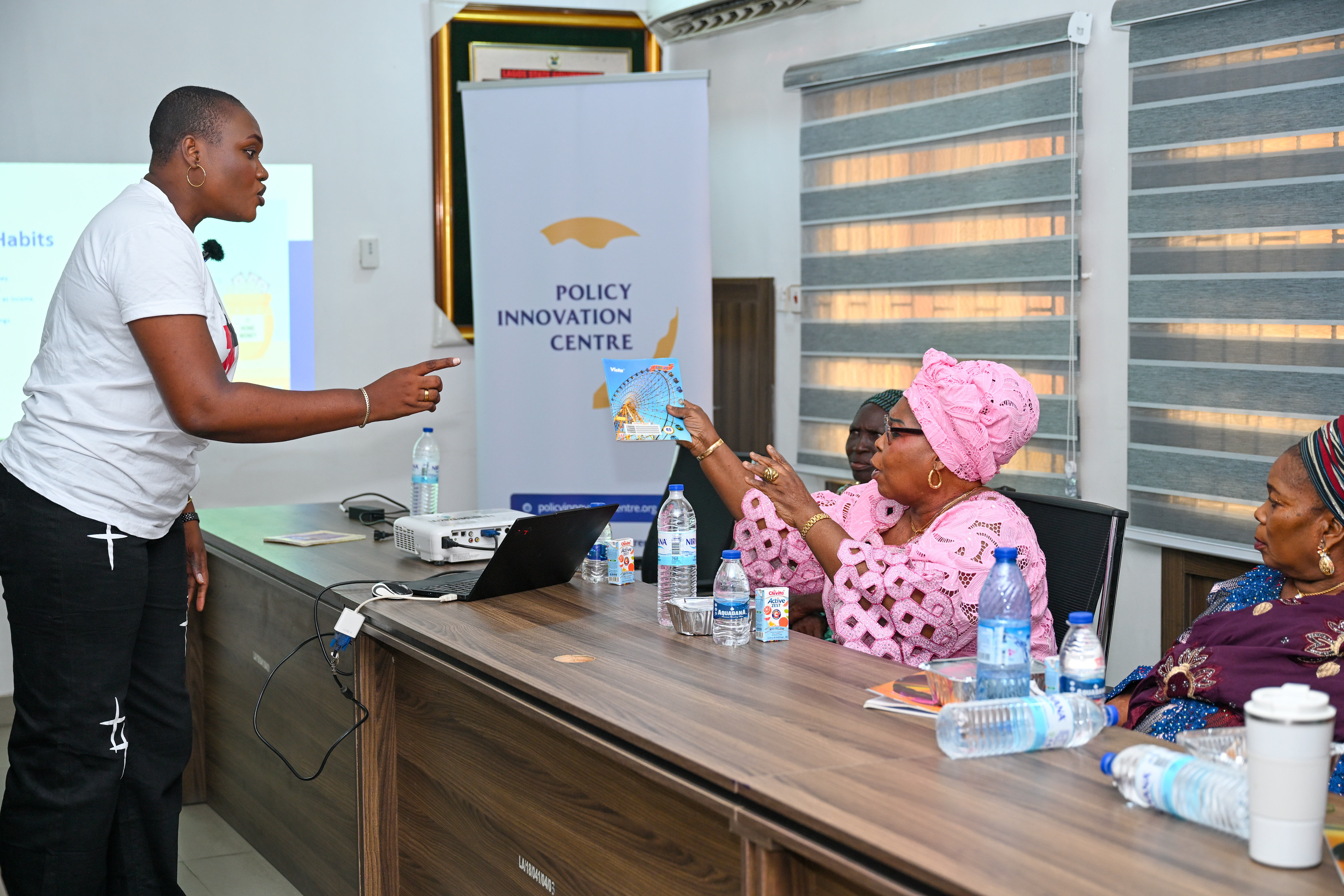
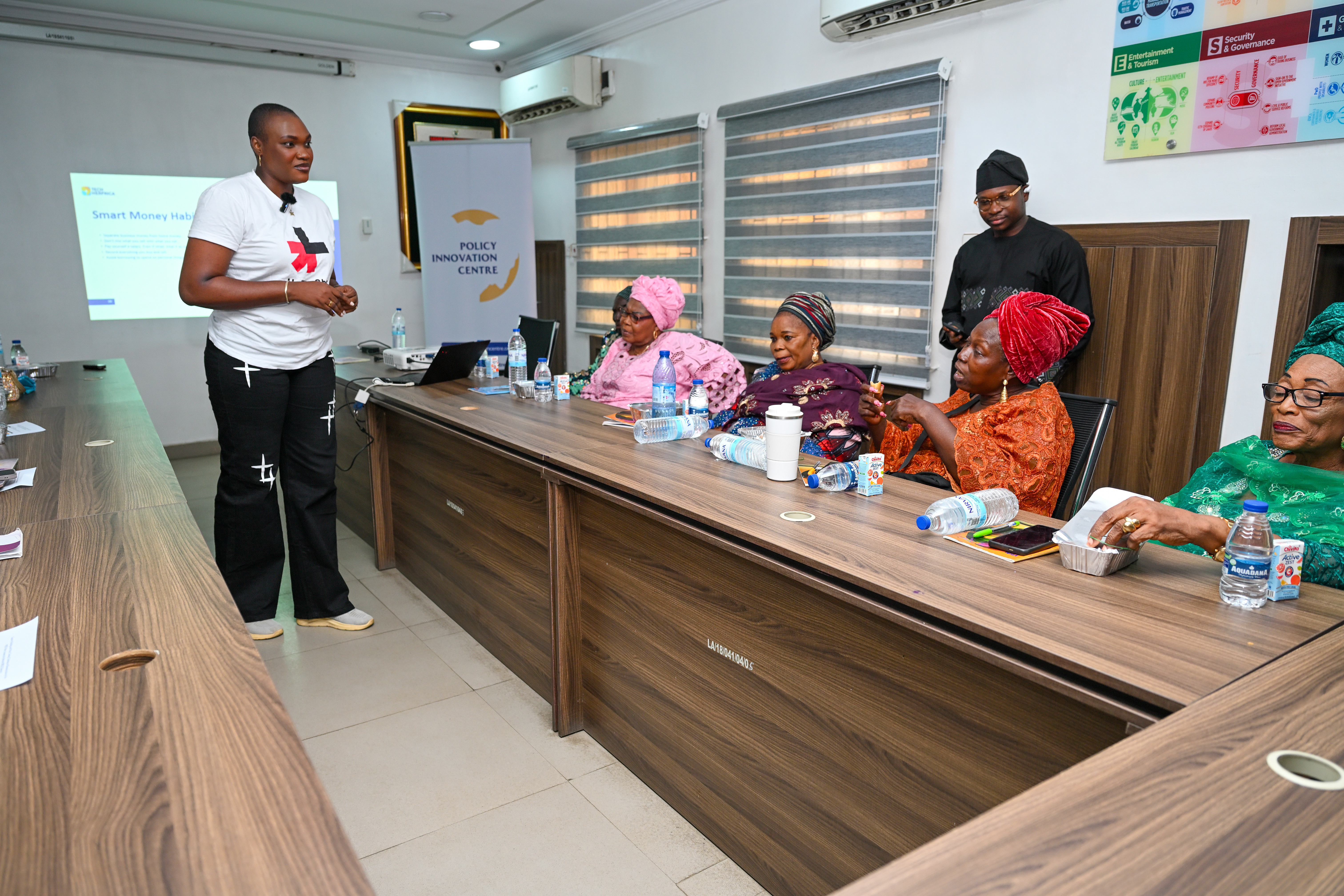
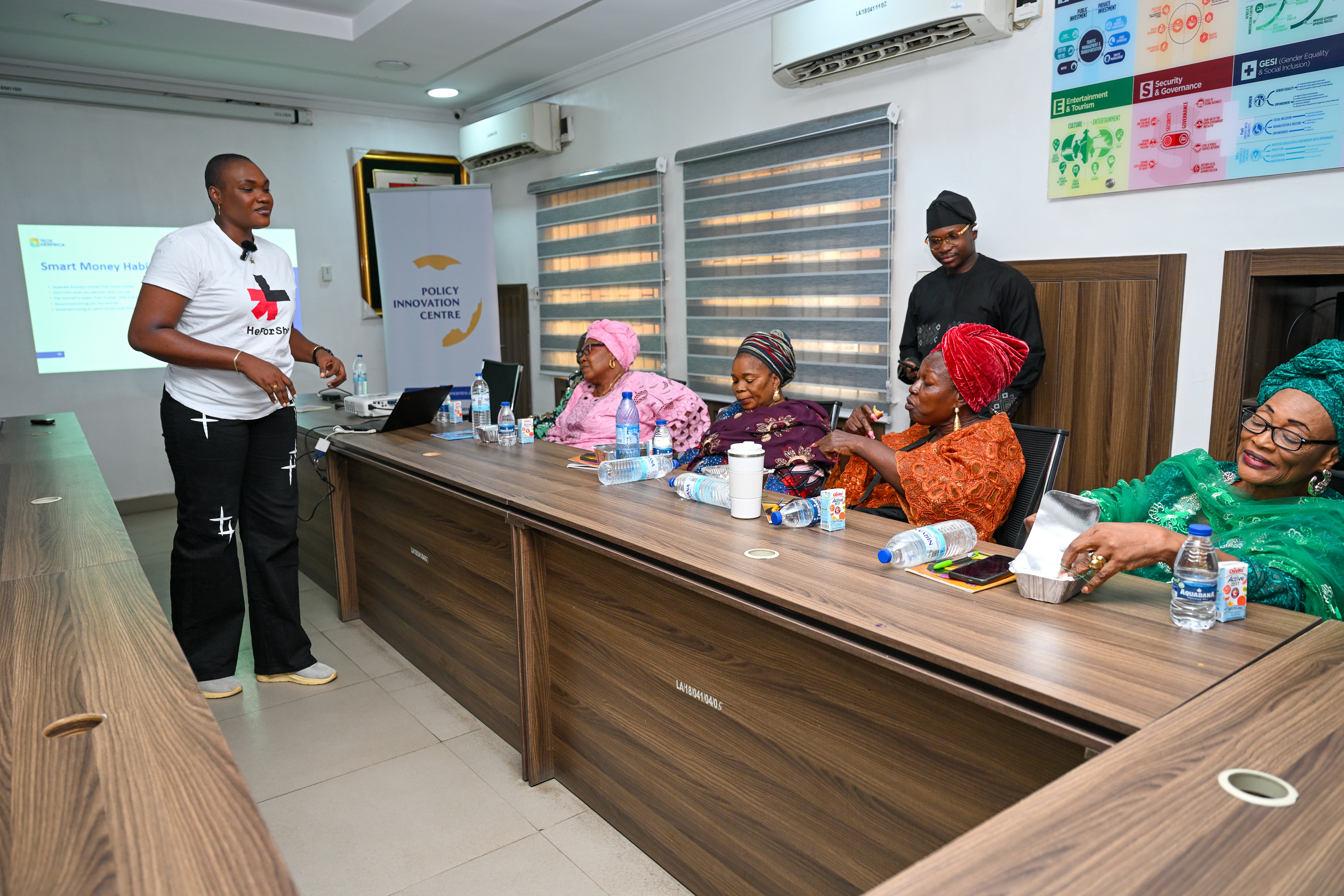
Visual aids, demonstrations, scenario-based explanations, and interactive discussions.
- Participants:
15 Iyalojas from diverse markets in Lagos State.
- Facilitation:
Trainer from Tech Herfrica with PIC coordination.
- Stakeholders:
Union Bank, Access Bank, WAPA representatives.
5.0 Session Highlights
5.1. Financial Inclusion Fundamentals
Participants were introduced to the concept and benefits of financial inclusion, including access to formal savings, credit, and secure transactions.
5.2. Bookkeeping Simplified
Covered the basics of recording daily sales, distinguishing between revenue and expenses, and understanding profit. Tools were presented in a low-literacy-friendly format.
5.3. Understanding Loans
- Definitions of loan terms
- Eligibility requirements
- Required documentation
- Interest, duration, and repayment structures
- Responsible borrowing practices
- Using loans for productive purposes
Financial institutions provided direct responses to participants’ concerns. 2
6.0 Key Outcomes
- Increased Awareness:
Participants demonstrated improved understanding of loan processes and financial inclusion concepts.
- Reduced Misconceptions:
Engagement with bank representatives dispelled common fears related to formal lending.
- Strengthened Policy Alignment:
Training advanced Lagos State’s efforts to operationalize the WEE Policy.
- Skill Acquisition:
Participants practiced basic bookkeeping and expressed willingness to adopt the templates.
7.0 Recommendations & Next Steps
The training highlighted opportunities to strengthen financial inclusion and support for market women through targeted follow-up actions and scaled implementation.
- Market-Level Financial Clinics: Banks should hold regular sessions in markets to onboard and support women with loans.
- Iyalojas Mentorship: Provide brief follow-up support to help Iyalojas confidently train their members.
- Simplified Loan Processes: Collaborate with banks to make documentation and access to loans easier.
- Policy Integration: Use this training model to support the broader Lagos State WEE Policy rollout.
8.0 Conclusion
The capacity-building training successfully equipped the 15 participating iyalojas with practical knowledge on financial inclusion, bookkeeping, and loans. Their engagement and active participation demonstrated readiness to cascade these skills to their communities, supporting the broader objectives of the Lagos State Women Economic Empowerment Policy. Continued follow-up and support will be critical to translating the training into measurable impact for women traders across the state.